Access problems for Muswell Hill gardeners: narrow garden fixes that actually work
If you have ever tried to move a wheelbarrow, a rake, a mower, and a bag of clippings through a side return that feels barely shoulder-width, you already know the problem. Access problems for Muswell Hill gardeners narrow garden fixes are not a niche concern at all; they are part of everyday work in many London gardens. In Muswell Hill, where homes often sit on sloped plots, tight terraces, awkward side passages, and steep rear access, the way into the garden can matter just as much as the garden itself.
Good access planning saves time, reduces damage, and makes maintenance much easier. Bad access can turn a simple tidy-up into a long, frustrating job. This guide explains the issue properly, then walks through practical fixes for narrow gardens, what to look for, and how to decide which approach makes sense for your space. A bit of planning goes a long way. Honestly, sometimes it is the difference between a job that feels manageable and one that feels like a small expedition.
For readers who want a broader service overview alongside these access considerations, the services overview is a helpful starting point, and you can also review the team's approach on the about us page. If you are already comparing options, the pricing and quotes information can also help frame expectations.
Why Access problems for Muswell Hill gardeners narrow garden fixes Matters
Access sounds like a small detail until you are trying to carry soil through a passage that has a tight corner and a gate that only opens halfway. Then it becomes the whole job. In Muswell Hill, many gardens were not designed for easy movement of materials, and that affects everything from lawn care to full clearance, hedge work, and bigger landscaping projects.
When access is poor, the knock-on effects are immediate. Labour takes longer, equipment choices become limited, and there is a greater chance of scuffed walls, broken paving, trampled borders, or repeated trips back and forth. Small gardens can still be lovely, but if the route in is awkward, even regular garden maintenance becomes harder than it should be.
Narrow access also changes how work should be planned. For example, a garden that is straightforward for light pruning may become challenging when you need to remove a hedge, take out a tree stump, or shift a pile of wet green waste after rain. That is where thoughtful access fixes matter. The aim is not to make every garden feel wide open. The aim is to make the space workable.
If you are dealing with overgrown areas or a lot of built-up material, services such as garden clearance and garden maintenance are often the most useful starting points. They are especially helpful where the garden needs to be brought back under control before any longer-term access improvements can be considered.
Expert summary: In a narrow Muswell Hill garden, access is not just a convenience issue. It affects cost, safety, time on site, the tools you can use, and how cleanly the final result is delivered. Fix the access first, and the whole job usually gets easier.
How Access problems for Muswell Hill gardeners narrow garden fixes Works
Narrow-garden access fixes work by reducing friction. That sounds obvious, but it is the right way to think about it. Every obstacle in the path from front door to back fence adds friction: narrow gates, steps, awkward bends, loose gravel, overhanging branches, bins in the way, poor lighting, or slippery paths after a shower. Fixes usually target one or more of those points.
In practical terms, the work often begins with a site walk-through. You look at the route, not just the garden. How wide is the gate? Is there enough clearance for a wheelbarrow? Are there low branches that catch tools or ladders? Is the ground level enough to carry compost sacks without dropping them? Those are the kinds of questions that matter on the day.
Sometimes the best fix is temporary and operational. For example, you might use smaller loads, split materials into manageable bags, or stage work in a different order so bulky waste leaves before delicate planting starts. Other times, the answer is more permanent, such as reshaping a path, replacing a heavy gate, or adjusting a border edge to create a better route. Not glamorous, but very effective.
The route through the garden can also be helped by better pruning. If a hedge has crept in and narrowed the passage, a focused hedge trimming visit may restore a proper working width. If a tree canopy is brushing the access line or creating low head-height, a careful look at tree lopping and removal may be relevant too, though any tree work should be assessed properly and handled with care.
The main idea is simple: improve movement, reduce strain, and make the garden easier to work in without overcomplicating the space.
Key Benefits and Practical Advantages
Better access fixes do more than make the job smoother. They have some real, everyday benefits that are easy to miss until you compare a difficult garden with a well-planned one.
- Less physical strain: Fewer awkward lifts, fewer twisted turns, and less repeated carrying through tight spaces.
- Lower risk of damage: Better movement routes reduce the chance of scraping walls, crushing plants, or chipping paving.
- Faster job completion: When equipment and waste can move efficiently, the work tends to flow more naturally.
- Cleaner finish: A good access plan helps keep soil, clippings, and debris where they belong.
- More service options: Some jobs are simply impossible without access improvements, especially larger landscape changes.
There is also a quieter benefit: confidence. If a gardener knows the route in and out is workable, they can focus on the quality of the job rather than constantly avoiding a tight squeeze. That shows in the finished result.
For homeowners, this can also make future upkeep much easier. A narrow garden does not need to remain difficult forever. Even modest changes, like improving the approach to the main planting area or clearing clutter from the side access, can make routine work feel twice as manageable. And yes, that is often where the real value sits.
If you are looking at more than just maintenance, the broader landscaping and landscape gardening pages can help when access fixes are part of a bigger redesign. For surface changes or structural improvements, decking services may also be relevant, particularly where level changes or movement routes need a cleaner, more usable finish.
Who This Is For and When It Makes Sense
These fixes are for anyone whose garden is harder to reach than it should be. In practice, that includes a lot of Muswell Hill property owners. Terraces, split-level gardens, side returns, uphill plots, and homes with limited rear access all create their own little puzzles.
It makes sense to prioritise access fixes if any of the following sound familiar:
- You can only move tools through the garden one at a time.
- A wheelbarrow barely fits, or not at all.
- Gates, paths, or corners are too tight for regular maintenance work.
- Work takes far longer because materials must be carried in tiny loads.
- You have had damage to planting beds, walls, fencing, or paving during previous jobs.
- Overgrowth is making the access problem worse every season.
It also makes sense before a bigger project. If you are planning a redesign, a new patio, a clearer lawn layout, or a more usable entertaining area, access should be discussed early. Otherwise, the finished garden may look nice on paper but still be awkward to maintain in real life. That happens more often than people think.
For properties with heavy overgrowth or a build-up of unwanted material, a combination of garden clearance and planned maintenance is usually the most practical route. If you are unsure what the garden needs first, a professional review through the company's services overview can help frame the options without rushing into the wrong job.
Step-by-Step Guidance
A calm, practical process usually works best. You do not need a dramatic overhaul on day one. Start with the access route and build from there.
- Map the route in and out. Walk the full path from street to rear garden and note every pinch point, step, bend, gate, and obstacle.
- Measure the narrowest points. A rough visual check is not enough. Measure gate openings, passage widths, and any awkward corners.
- Identify what actually needs to move. Clippings? Soil? paving materials? bulky branches? Different materials need different handling.
- Remove avoidable obstructions. Stored pots, bins, old timber, leaning tools, and stray furniture often consume precious centimetres.
- Trim back overgrowth. Hedges, climbers, low branches, and flopping stems can make a narrow route feel even tighter.
- Choose the right work order. For example, clear waste first, then carry in new materials later, rather than mixing both jobs together.
- Use smaller, safer loads. This is slower on paper but often faster overall because it avoids stoppages and mistakes.
- Review the route after the work. If access still feels awkward, make a note of the one or two best improvements for next time.
A tiny example: if a passage has a blind turn and a loose paving step, you may not need to rebuild the whole thing. Sometimes simply clearing the corner, smoothing the walking line, and trimming the hedge back by a manageable amount makes the whole route feel different. Small win, but a real one.
One useful rule of thumb: deal with the biggest blockage first. It sounds almost too simple, but access problems tend to multiply. Fix the main choke point and the rest often becomes less troublesome immediately.
Expert Tips for Better Results
Here are the things that tend to matter most in real gardens, not just in theory.
- Use the right-sized tools. Compact tools are not a compromise in a narrow garden; they are often the smarter choice.
- Keep a clean route. Even a good access path becomes awkward if it is left full of offcuts, buckets, or slippery mud.
- Watch the weather. A route that feels fine on a dry morning can become awkward and messy after lunch if it rains. Classic British timing, really.
- Think vertically. Overhead growth can be as much of a problem as width. Low branches catch clothes, bags, and ladders.
- Protect surfaces early. If paving, steps, or decking are fragile, plan coverings or safer carry routes before the work begins.
- Make one improvement lead to another. For example, hedge trimming may reveal better access, which then makes future maintenance easier. Nice domino effect.
Another tip: do not assume a narrow garden is automatically a poor garden. Some of the most charming spaces are compact, tucked away, and full of character. The job is to make them workable without flattening their personality. There is a balance there, and it matters.
If sustainability is part of your thinking, it is worth considering waste handling and material reuse alongside access planning. The recycling and sustainability page is useful background when the work involves green waste, hard materials, or rethinking how much you bring into the garden in the first place.
Common Mistakes to Avoid
Access projects can go wrong in surprisingly ordinary ways. The good news is that most of them are avoidable.
- Ignoring the route and focusing only on the garden interior. The prettiest planting scheme in the world will not help if you cannot reach it comfortably.
- Trying to force large tools through tiny spaces. That usually ends with damage, frustration, or both.
- Not clearing temporary clutter first. Old planters, toys, bags of compost, and half-finished DIY bits can waste valuable access width.
- Assuming one fix solves everything. Often you need a few small adjustments rather than one big intervention.
- Starting major work without checking waste movement. If clippings and debris cannot leave cleanly, the site can quickly become chaotic.
- Overlooking safety on slopes or steps. Muswell Hill gardens can have levels, and a slight incline changes how loads should be carried.
One easy mistake is to trim too aggressively in order to "create" access. That can leave plants stressed or the garden looking bare in a way that takes months to recover from. Better to trim with intention, not panic. There is a difference, and gardeners can spot it straight away.
If you are unsure whether your issue is access, overgrowth, or both, a cautious first pass is usually best. A modest garden maintenance visit can clarify the situation before you commit to a larger job.
Tools, Resources and Recommendations
You do not need a warehouse of specialist kit to solve most narrow-garden access problems. In many cases, practical basics are enough.
| Tool or approach | Best use | Why it helps in narrow gardens |
|---|---|---|
| Compact wheelbarrow | Moving soil, clippings, light rubble | Easier to turn in tight routes and less likely to snag on gates |
| Smaller bags or trugs | Carrying lighter loads by hand | Reduces spill risk and gives better control in cramped areas |
| Hand pruning tools | Trimming near access points | Useful where larger equipment cannot be moved safely |
| Temporary floor protection | Protecting paving, decking, or steps | Helps prevent scuffs and muddy marks during repeated trips |
| Basic measuring tape | Checking widths and clearances | Turns guesswork into a real plan |
In terms of service planning, it can help to look at the whole package rather than one isolated task. If access is blocked by a mass of material, garden clearance may come first. If the route is narrowed by hedges or shrubs, hedge trimming may be the more immediate fix. If the garden also needs structural improvement, then landscaping could be the more strategic option.
For visitors interested in how the company operates, the insurance and safety and health and safety policy pages are sensible reading. They help set expectations around professional working standards, especially when a site is tight, awkward, or a bit unpredictable.
Law, Compliance, Standards, or Best Practice
For domestic garden work in the UK, the main point is not to get lost in formalities. The practical standard is simple: work safely, communicate clearly, and avoid unnecessary damage. Where access is difficult, that matters even more because risks rise quickly in cramped spaces.
Best practice usually includes clear planning, sensible manual handling, protective measures for surfaces, and realistic limits on what can be moved by hand. If any work involves ladders, tree branches, heavy waste, or uneven ground, careful assessment is important. In some cases, a more specialised approach is needed, especially for tree work or substantial structural changes.
Homeowners should also expect transparency about how work will be carried out, how waste will be handled, and what the contractor can safely access. If a route is too narrow for a machine or too awkward for bulky materials, that should be discussed before the job begins. No one benefits from surprises halfway through.
When comparing providers, it is reasonable to ask about insurance, working methods, payment terms, and the kind of access limitations they can handle. The payment and security and terms and conditions pages can be useful for understanding the practical side of booking and delivery. If something feels unclear, asking early is always better than discovering it on the day.
Options, Methods, or Comparison Table
There is no single perfect fix for every narrow garden. The right method depends on what is blocking access, how often the space needs work, and whether you want a quick improvement or a longer-term solution.
| Method | Best for | Strengths | Limits |
|---|---|---|---|
| Clear the route | General maintenance access | Fast, low disruption, often enough for routine jobs | Does not solve structural width problems |
| Trim back overgrowth | Hedges, climbers, and branches narrowing the passage | Often creates an immediate improvement | Requires ongoing upkeep |
| Change work method | Light-to-medium garden tasks | No construction required, flexible, cost-conscious | May be slower than a permanent fix |
| Reshape paths or borders | Repeated access problems | Improves long-term usability | Needs planning and usually more budget |
| Combine with landscaping | Broader garden redesign | Best for creating a coherent, easy-to-manage space | Most involved option, not always necessary |
To be fair, many gardens need a mix of these methods. A route might be cleared first, then the hedge trimmed, then the paving adjusted later. That layered approach often feels more realistic than chasing one magic fix.
Case Study or Real-World Example
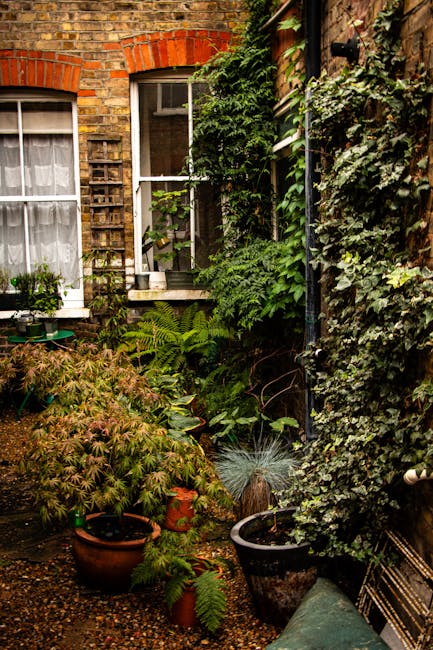
Picture a small Muswell Hill rear garden reached through a narrow side passage with one awkward corner and a gate that opens inwards. Nothing extreme on its own, but enough to make maintenance jobs drag. Clippings had to be carried out in small armfuls, the hedge had begun to spill into the route, and a simple seasonal tidy-up was taking far longer than it should.
The first move was not a redesign. It was a tidy access review. Loose items were removed from the passage, the hedge line was cut back carefully, and the route was cleared so tools could turn without scraping the wall. After that, routine maintenance became far easier. There was no dramatic transformation, just less friction.
Later, the garden was improved further with better path definition and a tidier planting edge. That helped create a clearer movement line and made future work simpler. The interesting part? The garden still felt like itself. It had not been stripped back. It had just been made more usable.
That is often what good access fixing looks like in practice. Quiet, sensible, a little unglamorous maybe. But effective. And once you have experienced the difference, you do not really want to go back.
Practical Checklist
Use this checklist before planning work in a narrow garden:
- Measure the tightest gate, passage, and turn.
- Check whether tools, bags, or a wheelbarrow can pass comfortably.
- Remove clutter from the route before work starts.
- Identify overgrowth that is narrowing the access line.
- Decide whether the problem is temporary, seasonal, or structural.
- Choose the safest load size for carrying waste and materials.
- Protect walls, paving, steps, and decking where needed.
- Plan the order of tasks so the route stays clear.
- Think about whether the fix should be maintenance-only or part of a wider redesign.
- Check that safety, insurance, and payment details are clear before booking.
If you want a handy place to compare the wider service offering before moving ahead, the services overview and pricing and quotes pages are useful companions to this checklist.
Get a free quote today and see how much you can save.
Conclusion
Access problems for Muswell Hill gardeners narrow garden fixes are really about making small spaces work properly. Once the route is clearer, the whole garden becomes easier to maintain, easier to improve, and less stressful to live with. That can mean better results today and fewer headaches next month, which is no small thing.
Whether the solution is trimming back growth, clearing out clutter, reshaping a route, or planning a smarter maintenance routine, the key is to treat access as part of the garden design, not an afterthought. A narrow garden can be beautiful, practical, and surprisingly easy to manage once the movement line is right. Quietly right. That is usually the sweet spot.
And if the garden still feels awkward after a first tidy-up, that is okay too. Most real gardens need a bit of testing, adjusting, and patience. The good news is that improvement almost always starts with one sensible step.
Frequently Asked Questions
What are the most common access problems in narrow Muswell Hill gardens?
The most common issues are tight gates, narrow side passages, low branches, overgrown hedges, awkward steps, and routes that are hard to use with a wheelbarrow or larger tools. In many gardens, it is a mix of small things rather than one major block.
Can a narrow garden still be maintained properly?
Yes, absolutely. Narrow gardens can be maintained well if the access route is planned properly and the right tools and methods are used. In many cases, the trick is not more force, but better organisation.
Do I need landscaping if the access is poor?
Not always. Sometimes simple maintenance or clearance is enough. Landscaping becomes more useful when the access problem is repeated, structural, or tied to a wider redesign of the space.
Is hedge trimming a good first fix for access problems?
Often, yes. If hedges or climbers are narrowing the route, trimming them back can make an immediate difference. It is one of the quickest ways to regain usable space without changing the whole garden.
What if the garden can only be reached through a very narrow side passage?
Then the work usually needs to be planned around that limitation. Smaller loads, compact tools, careful waste handling, and a tidy route become essential. In some cases, a site review will show that a phased approach is the safest option.
How do gardeners protect paving and walls in tight spaces?
They may use protective coverings, smaller loads, and planned movement routes so tools and waste do not scrape against surfaces. Good handling matters a lot more in tight areas than it does in open ones.
Can access problems make garden clearance more expensive?
They can, because awkward access usually takes more time and effort. That said, the exact cost depends on the size of the job, the materials involved, and how difficult the route really is. It is better to ask early than guess.
What is the safest way to move waste through a narrow garden?
Usually, the safest way is to use smaller, manageable loads and keep the route clear. If the waste is bulky or awkward, it may need to be broken down before moving. Safety first, even if it feels a bit slower.
How can I tell whether my access issue is temporary or structural?
If the problem mainly comes from clutter or seasonal overgrowth, it is probably temporary. If the gate, passage, slope, or layout itself is the issue, it is structural and may need a more permanent fix.
Should access be discussed before a bigger garden project starts?
Yes, always. Access can affect equipment choice, labour time, materials, waste removal, and the final layout. Talking it through early avoids awkward surprises later.
Are there safety or insurance considerations for difficult access work?
Yes. Tight spaces can increase the risk of trips, slips, strain, and accidental damage, so clear working methods matter. It is sensible to check safety and insurance information before any work begins.
What is the best next step if I am not sure what my garden needs?
A practical assessment is usually the best next step. Start with the route, note the bottlenecks, and decide whether you need clearance, trimming, maintenance, or a fuller redesign. Once you know what is in the way, the right fix becomes much easier to choose.